Home>SCIENTISTS>Faculty and Staff

Institute of Vertebrate Paleontology and Paleoanthropology
Chinese Academy of Sciences
Chinese Academy of Sciences

Home>SCIENTISTS>Faculty and Staff
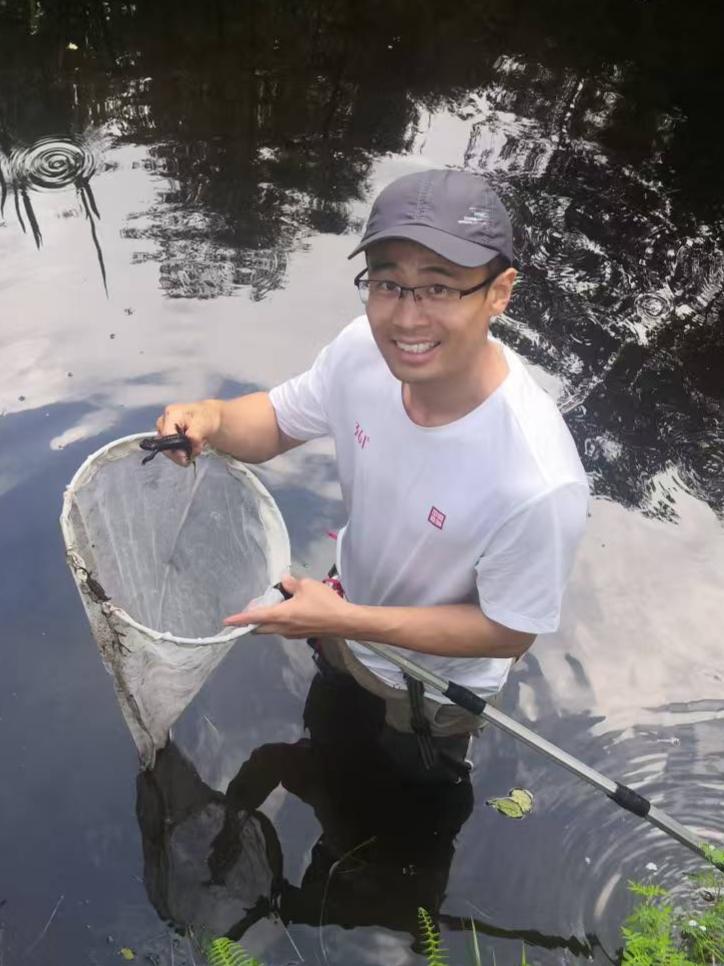
Title: Associate Professor
Fax:
E-mail: jiajia@ivpp.ac.cn
Education:
2010.09–2016.11 Ph.D. in Paleontology and Stratigraphy, Peking University, Beijing.
2014.03–2014.09 Visiting Ph.D. student in The University of Chicago, Chicago
2013.08–2014.02 Visiting Ph.D. student in American Museum of Natural History, New York
2006.09–2010.07 B.S. in Marine Geology, China University of Geosciences, Beijing
Positions:
2024.03–Present IVPP
2023.02–2024.02 Research Associate, Shandong University of Science and Technology
2020.03–2023.02 Postdoctoral Associate, University of Calgary
2017.03 –2020.02 (awarded in 2016.12) Boya Postdoctoral Fellow, Peking University
I seek to understand the impacts of fish-to-tetrapod transition on morphological diversities of early tetrapods, the origin of modern amphibians (toads and frogs, salamanders and newts, and caecilians) and the interactions between morphological diversity and environmental and functional constraints, approached using comparative morphology, phylogeny, functional morphology, ontogeny and embryology.
2021 Best paper award, China Science Data
2016 Boya Postdoctoral Fellowship, Peking University
2015 Travel grant, Peking University
2014 Travel grant, The University of Chicago
2013 Visiting Student Scholarship, Chinese Scholarship Council
2012, 2013 President Scholarship, Peking University
2012 “May Fourth” Scholarship, Peking University
2010, 2011 First Prize Scholarship, Peking University
2007, 2008 National Scholarship, Ministry of Education of China
2006–2010 Second Prize Scholarship, China University of Geosciences (Beijing)
14. J. Jia*. Wang, G. S. Bever, L. Fei, C.Y. Ye, J.P. Jiang*, K.Q. Gao*. 2025. Comparative osteology of the hynobiid complex Liua-Protohynobius-Pseudohynobius (Amphibia, Urodela): II. Anatomy and taxonomic revision of enigmatic Protohynobius puxiongensis. Journal of Morphology 286: e70087. DOI: 10.1002/jmor.70087.
13. Chen, C.S., J. Jia*, X.-T. Wang, J. Yang, K.-Q. Gao*. 2025. Anatomy of the critically-endangered Anji Salamander (Hynobius amjiensis) provides new insights into morphological evolution of salamanders. Journal of Morphology 286: e70028. DOI: 10.1002/jmor.70028
12. Jia*, J., J.S. Anderson, J.-P. Jiang, W. Wu, N.H. Shubin*, K.-Q. Gao*. 2022. Ossification patterns of the carpus and tarsus in salamanders and impacts of preaxial dominance on the fin-to-limb transition. Science Advances. 8(41):eabq7669. DOI: 10.1126/sciadv.abq7669
11. Jia*, J., G. Li, K.-Q. Gao*. 2022. Palatal morphology predicts the paleobiology of early salamanders. eLife Sciences 11:e76864. DOI: 10.7554/eLife.76864.
10. Jia*, J., J. S. Anderson, K.-Q. Gao*. 2021. Middle Jurassic stem hynobiid from China shed new light on the evolution of basal salamanders. iScience 24: 102744. DOI: 10.1016/j.isci.2021.102744. [Featured article in iScience]
9. Jia*, J., K.-Q. Gao*, J. Jiang*, G. S. Bever, R. Xiong, and G. Wei. 2021. Comparative osteology of the hynobiid complex Liua-Protohynobius-Pseudohynobius (Amphibia, Urodela): I. cranial anatomy of Pseudohynobius. Journal of Anatomy 238: 219–248. DOI: 10.1111/joa.13311. [Cover article]
8. Jia*, J., and K.-Q. Gao*. 2019. A new stem hynobiid salamander (Urodela, Cryptobranchoidea) from the Upper Jurassic (Oxfordian) of Liaoning Province, China. Journal of Vertebrate Paleontology 39(2): e1588285. DOI: 10.1080/02724634.2019.1588285.
7. Jia, J., J. Jiang, M.H. Zhang, and K.-Q. Gao*. 2019. Osteology of Batrachuperus yenyuanensis (Urodela, Hynobiidae), a high-altitude mountain stream salamander from western China. PLoS ONE 14(1): e0211069. DOI: 10.1371/journal.pone.0211069.
6. Jia*, J., M. Zhang, K.-Q. Gao and J. Jiang. 2018. 3D μCT dataset of skeletons of the holotype of Batrachuperus londongensis Liu and Tian, 1978, an endemic hynobiid (Amphibia, Caudata) from Mount Emei, Sichuan Province, China. China Scientific Data 3(2): 1–15. DOI: 10.11922/csdata.2018.0005.zh. [Published both in Chinese and in English].
5. Jia*, J., and K.-Q. Gao. 2018. 3D high-resolution μCT dataset of skeletons of Qinglongtriton gangouensis, a basal salamandroid (Amphibia, Caudata) from the Upper Jurassic of Hebei Province, China. China Scientific Data 3(1): 1–12. DOI: 10.11922/csdata.2017.0004.zh. [Published both in Chinese and in English as Cover article].
4. Jiang, J.-p., J. Jia, M. Zhang, and K.-Q. Gao*. 2018. Osteology of Batrachuperus londongensis (Urodela, Hynobiidae): study of bony anatomy of a facultatively neotenic salamander from Mount Emei, Sichuan Province, China. PeerJ 6: e4517. DOI: 10.7717/peerj.4517.
3. Jia, J., and K.-Q. Gao*. 2016. A new hynobiid-like salamander (Amphibia, Urodela) from Inner Mongolia, China, provides a rare case study of developmental features in an Early Cretaceous fossil urodele. PeerJ 4: e2499. DOI: 10.7717/peerj.2499.
2. Jia, J., and K.-Q. Gao*. 2016. A new basal salamandroid (Amphibia, Caudata) from the Upper Jurassic of Qinglong, Hebei Province, China. PLoS ONE 11(5): e0153834. DOI: 10.1371/journal.pone.0153834.
1. Gao*, K.-Q., J. Chen, and J. Jia. 2013. Taxonomic diversity, stratigraphic range, and exceptional preservation of Juro-Cretaceous salamanders from northern China. Canadian Journal of Earth Sciences 50: 255-267. DOI: 10.1139/e2012-039.
9. International Partnership Program of Chinese Academy of Sciences (No. 052GJHZ2025031FN). Evolutionary and developmental mechanisms underneath the fin-to-limb transition. PI. Jan. 2026–Dec. 2028.
8. National Science Foundation of China General Program (No. 42572018). Investigations on evolutionary-developmental patterns of carpals and tarsals of cryptobranchoid salamanders. PI. Jan. 2026–Dec. 2029.
7. Chinese Academy of Sciences. Evolutionary and Developmental patterns of early tetrapods. PI. Jan. 2025–Dec.2027.
6. State Key Laboratory of Palaeobiology and Stratigraphy, Nanjing Institute of Geology and Palaeontology, Open research fund (No. 193111)---Evolutionary and Developmental Study on the Hyobranchial Apparatus in Fossil and Living Cryptobranchoids (Urodela, Cryptobranchoidea). PI. Jul. 2019–Jun.2022.
5. National Science Foundation of China, General program (No. 41872008)---Neoteny and Heterochrony: integrative study of evolutionary development in fossil and living salamanders from China. Participant. Jan. 2019–Dec.2022.
4. National Science Foundation of China (No. 41702002)---Evolutionary development of living and fossil salamanders (Urodela: Cryptobranchoidea) from China. PI. Jan. 2018–Dec. 2020.
3. Shandong Provincial Key Laboratory of Depositional Mineralization & Sedimentary Mineral, Shandong University of Science and Technology. Liu Baojun Youth Fund in Earth Science (No. DMSM2017002) ---New discovery of the hynobiid-like salamanders from the Upper Jurassic of western Liaoning, China. PI. Sep. 2017– Aug. 2019.
2. Key Laboratory of Economic Stratigraphy and Palaeogeography of the Chinese Academy of Sciences (Nanjing Institute of Geology and Palaeontology), Open research fund (No. 2017KF03)---Restudy of the hynobiid-like stem cryptobranchoid Liaoxitriton daohugouensis (Amphibia: Caudata) based on new fossil materials. PI. Jan. 2017–Dec. 2018.
1. National Science Foundation of China (No. 41672016)---Fossil-Morphology-Molecular: combined cladistic analysis of tailed amphibians (Amphibia, Urodela). Participant. Jan. 2013–Dec. 2016.