Home>SCIENTISTS>Faculty and Staff

Institute of Vertebrate Paleontology and Paleoanthropology
Chinese Academy of Sciences
Chinese Academy of Sciences

Home>SCIENTISTS>Faculty and Staff
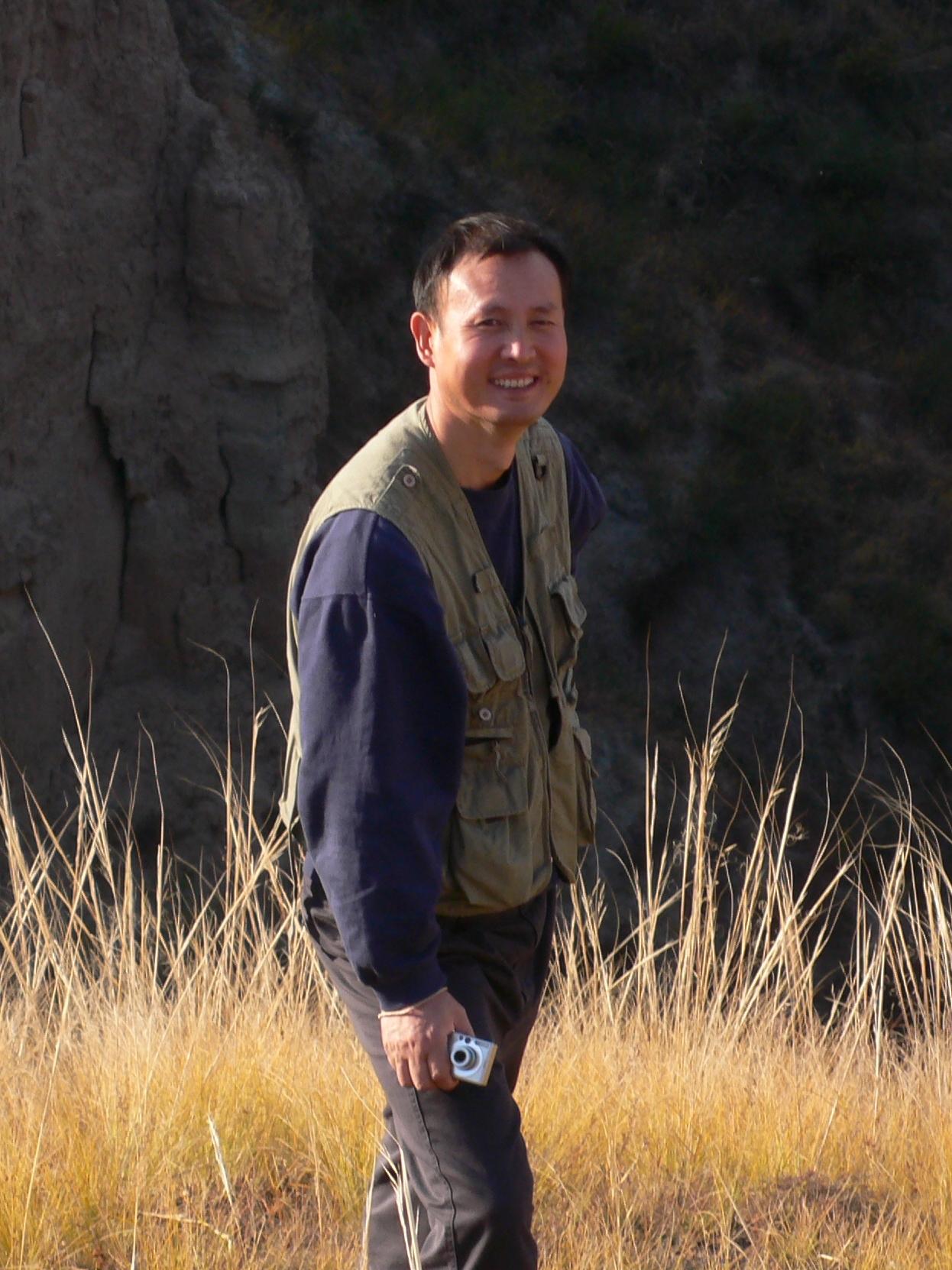
Title: Professor
Fax: 010-68337001
E-mail: tonghaowen@ivpp.ac.cn
Education
1985-1989: Ph. D. in Paleontology, Department of Marine Geology in Tongji University in Shanghai, China.
1982-1985: Master in Paleontology, Department of Geology in Northwest University in Xi’an, Shaanxi, China.
1978-1982: Bachelor in Geology, Department of Geology in Northwest University in Xi’an, Shaanxi, China.
Professional positions
2003- Research Professor in the Institute of Vertebrate Paleontology and Paleoanthropology (Beijing), Chinese Academy of Sciences.
2006- Adjunct Professor of the University of Chinese Academy of Sciences (Graduate University of Chinese Academy of Sciences) in Beijing, China.
1997-2003: Research Associate, Institute of Vertebrate Paleontology and Paleoanthropology (Beijing), Chinese Academy of Sciences.
1989-1997: Assistant, Institute of Vertebrate Paleontology and Paleoanthropology (Beijing), Chinese Academy of Sciences.
Scholarships and Fellowships
1999: Institute de Paléontologie Humaine, Muséum National d'Histoire Naturelle, (Paris), France.
1998: The Centre de Paléontologie stratigraphique et Paléoécologie, Université Claude Bernard - Lyon 1, France.
Quaternary mammalian fossils from prehistoric sites: their evolution and paleoenvironmental implications, mainly focusing on pachyderms; relationships between humans and the mammalian faunas.
89. TONG Haowen, JIANGZUO Qigao, LI Qiang, CHANG Meijing, LIU Boxuan, JIN Zetian, 2025. New mammalian fossils from the Hualongdong Site. Acta Anthropologic Sinica, 44(5): 779−798.
88. TONG H W, CHEN X, ZHANG B, SUN J J, 2025. New fossil materials of Sus lydekkeri from the Early Pleistocene Shanshenmiaozui site in Nihewan Basin of North China. Vertebrata PalAsiatica, 63(3): 210–241.
87. TONG H W, CHEN X, ZHANG B, 2024. Early Pleistocene forerunners of Mammuthus-Coelodonta Faunal Complex in Nihewan Basin, North China. Quaternary International, 709: 15−28.
86. TONG, H.W., ZHANG, B., CHEN, X., 2024. An overview and new insights into the Quaternary mammalian fauna from Nihewan Basin in North China. Acta Anthropol. Sin. 43(1), 157−183.
85. ZHANG Bei, TONG Haowen, 2024. The comparative anatomy of the petrosal bone and bony labyrinth of four small-sized deer. The Anatomical Record, 307: 566–580.
84. TONG Haowen, ZHANG Bei, CHEN Xi, JIANGZUO Qigao, LIU Jinyi, WANG Xiaoming, 2023. New carnivoran remains from the Early Pleistocene Shanshenmiaozui site in Nihewan Basin, northern China. Quaternary International, 658: 60–79.
83. MEI Huijie, ZHANG Bei, LEI Huarui, TONG Haowen (Corresponding author), 2023. Antler fossil of Sinomegaceros ordosianus from Nanbaishan site of Late Pleistocene age in Yüxian, Hebei Province. Acta Anthropologica Sinica, 42(02): 225−237.
82. HU H Q, TONG H W, SHAO Q F, WEI G B, Yu H D, SHI J S, WANG X Q, XIONG C, LIN Y, LI N, WEI Z Y, WANG P, JIANGZUO Q G, 2022. New remains of Ailuropoda melanoleuca baconi from Yanjinggou, China: Throwing light on the evolution of giant pandas during the Pleistocene. Journal of Mammalian Evolution, https://doi.org/10.1007/s10914-022-09637-1.
81. HU H Q, TONG H W, YU H D, HAN F, SHI J S, XIONG C, YU Y, Ilyas M, WANG X Q, CHEN X, 2022. New study sheds light on the impressive intraspecific variation of Quaternary Asiatic black bears in China. Quaternary International, https://doi.org/10.1016/j.quaint.2022.10.007.
80.WANG H, LI Z Y, TONG H W, van Kolfschoten T, 2022. Hominin paleoenvironment in East Asia: The Middle Paleolithic Xuchang-Lingjing (China) mammalian evidence. Quaternary International, 633 (2022): 118–133.
79. ZHANG B., CHEN X., TONG H. W., 2022. Cervid fossils from Bailong Cave (Yunxi, Hubei) indicating a turnover on deer fauna around Mid-Pleistocene Transition in southern China. Historical Biology, DOI: 10.1080/08912963.2022.2102913.
78. TONG Hao-Wen, ZHANG Bei, CHEN Xi, WANG Xiao-Min, 2022. New fossils of small and medium-sized bovids from the Early Pleistocene Site of Shanshenmiaozui in Nihewan Basin, North China. Vertebrata PalAsiatica, 60(2): 134–168.
77. TONG H W, ZHANG B, CHEN X, WANG X M, SUN J J, 2021. Chronological significance of the mammalian fauna from the Early Pleistocene Shanshenmiaozui site in Nihewan Basin, northern China. Acta Anthropologica Sinica, 40(3): 469–489.
76. SUN J J, ZHANG B, CHEN X, DENG L, WEN J, TONG H W (Corresponding author), 2021. New fossils of Late Pleistocene Sus scrofa from Yangjiawan Cave 2, Jiangxi, China. Vertebrata PalAsiatica, 59(1): 64–80.
75. SHEN G, WANG Y R, TU H, TONG H W, WU Z K, Kuman K, Fink D, Granger D E, 2020. Isochron 26Al/10Be burial dating of Xihoudu: Evidence for the earliest human settlement in northern China. L’Anthropologie 124 (2020): 102790
74. ZHANG B, TONG H-W, 2020. New fossils of sambar (Rusa unicolor) from Bailong Cave, a Middle Pleistocene human site in Hubei, China. Quaternary International, 550: 120−129.
73. TONG H-W, CHEN X, ZHANG B, Rothschild B, White S, Balisi M, WANG X. 2020. Hypercarnivorous teeth and healed injuries to Canis chihliensis from Early Pleistocene Nihewan beds, China, support social hunting for ancestral wolves. PeerJ 8: e9858
72. Harrison T, ZHANG Y, WEI G, SUN C K, WANG Y, LIU J Y, TONG H W, HUANG B T, XU F, 2020. A new genus of pliopithecoid from the late Early Miocene of China and its implications for understanding the paleozoogeography of the Pliopithecoidea. Journal of Human Evolution, 145:102838 (1-20).
71. SHENG G L, HU J M, TONG H W, Llamas B, YUAN J X, HOU X D, CHEN S G, XIAO B, LAI X L, 2020. Ancient DNA of northern China Hystricidae sub-fossils reveals the evolutionary history of old world porcupines in the Late Pleistocene. BMC Evolutionary Biology (2020) 20:88.
70. TONG H W, ZHANG B, WU X Z, QU M S. Mammalian fossils from the Middle Pleistocene human site of Bailongdong in Yunxi, Hubei. Acta Anthropologica Sinica, 2019, 38(4): 613−640.
69. TONG H-W, ZHANG B, 2019. New fossils of Eucladoceros boulei (Artiodactyla, Mammalia) from Early Pleistocene Nihewan Beds, China. Palaeoworld, 28 (3): 403–424
68. WU X-J, PEI S-W, CAI Y-J, TONG H-W, LI Q, DONG Z, SHENG J-C, JIN Z-T, MA D-D, XING S, LI X-L, CHENG X, CHENG H, de la Torre I, Edwards RL, GONG X-C, AN Z-S, Trinkaus E, LIU W, 2019. Archaic human remains from Hualongdong, China, and Middle Pleistocene human continuity and variation. PNAS, 116(20): 9820−9824.
67. ZHANG B, CHEN X, TONG H W, 2018. Tooth remains of Late Pleistocene moschid and cervid (Artiodactyla, Mammalia) from Yangjiawan and Fuyan Caves of southern China. Quaternary International, 490 (2018): 21–32.
66. TONG H W, CHEN X, ZHANG B, 2018. New postcranial bones of Elasmotherium peii from Shanshenmiaozui in Nihewan Basin, Northern China. Quaternaire, 29 (3): 195–204.
65. JIANGZUO Q G, ZHANG B, DENG L, CHEN X, WEN J, TONG H W, 2018. Fossil Carnivora (Mammalia) from Yangjiawan Cave 2, Pingxiang, Jiangxi, with remarks about the tooth identification of Quaternary carnivores. In: Dong W. (ed.), Proceedings of the Sixteenth Annual Meeting of the Chinese Society of Vertebrate Paleontology. Beijing: China Ocean Press, 119−146.
64. TONG Hao-Wen, DENG Li, CHEN Xi, ZHANG Bei, WEN Jun, 2018. Late Pleistocene proboscideans from Yangjiawan caves in Pingxiang of Jiangxi, with discussions on the Stegodon orientalis–Elephas maximus assemblage. VERTEBRATA PALASIATICA, 56(4): 306–326.
63. TONG Haowen, WU Xiujie, DONG Zhe, SHENG Jinchao, JIN Zetian, PEI Shuwen, LIU Wu, 2018. Preliminary report on the mammalian fossils from the ancient human site of Hualong Cave in DongZhi, Anhui. Acta Anthropologica Sinica, 36(2): 284–305.
62. TONG H W, CHEN X, ZHANG B, WANG F G, 2018. New fossils of Bos primigenius (Artiodactyla, Mammalia) from Nihewan and Longhua of Hebei, China. Vertebrata PalAsiatica, 56(1): 69–92.
61. CHEN X, ZHAO H L, ZHANG B, TONG H W (Corresponding author), 2017. Report on the excavation of the Early Pleistocene Shigou Site B in Nihewan Basin, northern China. Quaternary Sciences, 37(4): 895–907.
60. ZHANG B, ZOU S L, CHEN X, ZHAO K L, WEN J, DENG L, TONG H W, 2017. Mammalian fossils from Yangjiawan Cave 2 of Pingxiang, Jiangxi Province and the indication of age. Quaternary Sciences, 37(1): 155–165.
59. CHEN X, TONG H W (Corresponding author), 2017. On the hindfoot bones of Mammuthus trogontherii from Shanshenmiaozui in Nihewan Basin, China. Quaternary International, 445(2017): 50–59.
58. TONG H W, CHEN X, ZHANG B, 2017. New fossils of Bison palaeosinensis (Artiodactyla, Mammalia) from the steppe mammoth site of Early Pleistocene in Nihewan Basin, China. Quaternary International, 445(2017): 250–268.
57. ZOU S L, CHEN X, ZHANG B Zhao K L, Wen J, Deng L, TONG H W (Corresponding author), 2016. Preliminary report on the Late Pleistocene mammalian fauna from Shangli County, Pingxiang, Jiangxi Province. Acta Anthropologica Sinica, 35(1): 109–120.
56. CHEN Xi,TONG Haowen, 2015. Taphonomy of the Canis chihliensis Fossil Assemblage from the Shanshenmiaozui Site, Nihewan Basin. Acta Anthropologica Sinica, 34(4): 553–564.
55. WANG Xiaomin, XU Chunhua, TONG Haowen, 2015. Pleistocene Bos (Bibos) gaurus from Bailong Cave in Yunxi County, Hubei, China. Acta Anthropologica Sinica, 34(3): 338–352.
54. LIU W, Martinon-Torres M, Cai Y J, Xing S, TONG H W, Pei S W, Sier M J, Wu X H, Edwards R L, CHENG H, Li Y Y, Yang X X, Bermudez de Castro J M & Wu X J. 2015. The earliest unequivocally modern humans in southern China. Nature, 526: 696–699.
53. Fernández-Jalvo Y, Andrews P, TONG H W, 2015. Taphonomy of the Tianyuandong human skeleton and faunal remains. Journal of Human Evolution (2015), http://dx.doi.org/ 10.1016/j.jhevol.2015.03.010.
52. JI X P, JABLONSKI N G, TONG H W (Corresponding author), SU D F, EBBESTAD Jan O R, LIU C W, YU T S, 2015. Tapirus yunnanensis from Shuitangba, a terminal Miocene hominoid site in Zhaotong, Yunnan Province of China. Vertebrata PalAsiatica, 53(3): 177–192.
51. TONG Haowen, CHEN Xi, WANG Xiaomin, 2015. On the skull of Bubalus youngi of Late Pleistocene from the plain area of Beijing, China. Quaternary Sciences, 35(3): 561–572.
50. TONG H W, CHEN X, 2016. On newborn calf skulls of Early Pleistocene Mammuthus trogontherii from Shanshenmiaozui in Nihewan Basin, China. Quaternary International, 406 (2016): 57–69.
49. LIU P, WU Z J, DENG C L, TONG H W, QIN H F, LI S H, YUAN B Y, ZHU R X, 2016. Magnetostratigraphic dating of the Shanshenmiaozui mammalian fauna in the Nihewan Basin, North China, Quaternary International, 400: 202–211.
48. GONG Xicheng,ZHENG Longting,XING Song, WU Xiujie,TONG Haowen,LIU Wu, 2014. Human Fossils Found from Hualong Cave, Dongzhi County, Anhui Province. Acta Anthropologica Sinica, 33 (4): 427–436.
47. TONG H W,2014. Fossils ofMacaca mulattafrom Tianyuan Cave, with notes on some previously unpublished specimens ofMacacafrom Zhoukoudian Area. Acta Geologica Sinica, 88(5):1397–1408.
46. TONG Haowen, WANG Fagang, ZHENG Min, CHEN Xi, 2014. New Fossils of Stephanorhinus kirchbergensis and Elasmotherium peii from the Nihewan Basin. Acta Anthropologica Sinica,33(3): 369–388.
45. TONG H-W, WANG X-M, 2014. Juvenile skulls and other postcranial bones of Coelodonta nihowanensis from Shanshenmiaozui, Nihewan Basin, China, Journal of Vertebrate Paleontology, 34(3): 710–724.
44. LI Yi-yuan, PEI Shu-wen, TONG Hao-wen, YANG Xiong-xin, CAI Yan-jun, LIU Wu, WU Xiu-jie, 2013. A preliminary report on the 2011 excavation at Houbeishan Fuyan Cave, Daoxian, Hunan Province[J]. Acta Anthropologica Sinica, 32(02): 133−143.
43. TONG H W, WANG X M, CHEN X, 2013. Late Pleistocene Bison priscus from Dabusu in Qian’an County, Jilin, China. Acta Anthropologica Sinica, 32(4): 485–502.
42. Turvey S T, TONG H-W, Stuart A J, Lister A M, 2013. Holocene survival of Late Pleistocene megafauna in China: a critical review of the evidence. Quaternary Science Reviews, 15: 156–166.
41. TONG H W, HU N, WANG X M,2012. New remains of Canis chihliensis (Mammalia, Carnivora) from Shanshenmiaozui, a Lower Pleistocene Site in Yangyuan, Hebei. Vertebrata PalAsiatica, 50(4): 335−360.
40.TONG H W, 2012. Evolution of the non-Coelodonta dicerorhine lineage in China. Comptes Rendus Palevol, 11: 555−562.
39. TONG H W, 2012. New remains of Mammuthus trogontherii from the Early Pleistocene Nihewan beds at Shanshenmiaozui, Hebei, Quaternary International,255 (2012): 217−230.
38. TONG Haowen, HU Nan, HAN Fei, 2011. A preliminary report on the excavations at the Early Pleistocene fossil site of shanshenmiaozui in Nihewan basin, Hebei, China. Quaternary Sciences, 31(4): 643−653.
37. TONG H W, HU N, LIU J Y, CLARKE R, 2011, Inter-Regional comparisons on the Quaternary large mammalian faunas between China and sub-Saharan Africa. Acta Geologica Sinica (English Edition), 85(1): 91−106.
36. TONG H-W, 2010. New materials of Mammuthus trogontherii (Proboscidea, Mammalia) of Late Pleistocene from Yuxian, Hebei. Quaternary Sciences 30 (2): 307−318.
35.TONG H-W, WU X Z, 2010. Stephanorhinus kirchbergensis (Rhinocerotidae, Mammalia) from the Rhino Cave in Shennongjia, Hubei. Chinese Science Bulletin, 55: 1157−1168.
34.Louys J, Travouillon K J, Bassarova M, TONG H-W,2009. The use of protected natural areas in palaeoecological analyses: assumptions, limitations and application. Journal of Archaeological Science 36 (2009): 2274–2288.
33. TONG H W, Guérin C, 2009. Early Pleistocene Dicerorhinus sumatrensis remains from the Liucheng Gigantopithecus Cave, Guangxi, China. Geobios, 42 (2009): 525–539.
32. HU Y W, SHANG H, TONG H W, Nehlich O, LIU W, ZHAO C H, YU J C, WANG C S, Trinkaus E, Richards M P, 2009. Stable isotope dietary analysis of the Tianyuan 1 early modern human. PNAS, 106(27 ): 10971–10974.
31. JIN ChangZhu, QIN DaGong, PAN WenShi, TANG ZhiLu, LIU JinYi, WANG Yuan, DENG ChengLong, ZHANG YingQi, DONG Wei, TONG HaoWen, 2009. A newly discovered Gigantopithecus fauna from Sanhe Cave, Chongzuo, Guangxi, South China. Chinese Science Bulletin, 54 ( 5 ) : 788−797.
30. TONG Hao-wen, LI Hong, XIE Jun-yi, 2008. Revisions of some taxa of the Salawusu fauna from Sjara-osso-gol area, Nei Mongol, China. Quaternary Sciences, 28(6): 1106−1113.
29. van der Made J, TONG H W, 2008. Phylogeny of the giant deer with palmate brow tines Megaloceros from west and Sinomegaceros from east Eurasia. Quaternary International, 179 (2008): 135–162.
28.TONG Hao-wen, ZHANG S Q, CHEN F Y, LI Q, 2008. Rongements sélectifs des os par les porcs-épics et autres rongeurs : cas de la grotte Tianyuan, un site avec des restes humains fossiles récemment découvert près de Zhoukoudian (Choukoutien). L’Anthropologie, 112: 353–369.
27.LI Qing, TONG Haowen, 2008. Age structure analysis of cervus nippon in Tianyuan cave at Zhoukoudian[J]. Acta Anthropologica Sinica, 27(02): 141−150.
26.TONG, Hao-wen, 2008. Quaternary Hystrix (Rodentia, Mammalia) from North China: Taxonomy, stratigraphy and zoogeography, with discussions on the distribution of Hystrix in Palearctic Eurasia. Quaternary International,179:126–134.
25.TONG Hao-wen , ZHANG Shuang-quan , LI Qing , XU Zhi-jun . Late Pleistocene mammalian fossils from the Xitaiping Cave, Shidu, Beijing. Vertebrata PalAsiatica, 2008, 46(1): 51−70.
24.TONG Hao-wen, 2007. Occurrences of warm-adapted mammals in north China over the Quaternary Period and their paleo-environmental significance. Science in China Series D: Earth Sciences, 50(9): 1327−1340.
23. Hong SHANG, Hao-wen TONG, Shuangquan ZHANG, Fuyou CHEN, and Erik Trinkaus, 2007. An early modern human from Tianyuan Cave, Zhoukoudian, China. PNAS, 104(16): 6573–6578.
22.Louys J, Curnoe D, TONG H-W, 2007. Characteristics of Pleistocene megafauna extinctions in Southeast Asia. Palaeogeography, Palaeoclimatology, Palaeoecology, 243: 152–173.
21.TONG Hao-wen, 2007. Aeretes melanopterus (Pteromyinae, Rodentia) from Tianyuan Cave near Zhoukoudian (Choukoutien) in China. Geobios 40: 219–230.
20.TONG Hao-wen, 2006. Composition des faunes de mammifères quaternaires en Chine selon un gradient Nord-Sud. L’anthropologie, 110: 870–887.
19.TONG Haowen, 2006. Hesperotherium sinense, a Chalicothere (Perissodactyla,Mammalia) from the Early Pleistocene Liucheng Gigantopithecus Cave. Vertebrata PalAsiatica, 44(04): 347−365.
18.TONG Haowen, SHANG Hong, ZHANG Shuangquan, LIU Jinyi, CHEN Fuyou, WU Xiaohong, LI Qing, 2006. Mammalian biostratigraphy of Tianyuan Cave, compared with that of upper cave at Zhoukoudian (Choukoutien). Acta Anthropologica Sinica, 25(01): 68−81.
17.TONG Haowen, 2005. Hystrix subcristata (Mammalia, Rodentia) from Tianyuan cave, a human fossil site newly discovered near Zhoukoudian (Choukoutien). Vertebrata PalAsiatica, 43(02): 135−150.
16. TONG Hao-wen, 2005. Dental characters of the Quaternary tapirs in China, their significance in classification and phylogenetic assessment. Geobios, 38 : 139−150.
15.TONG Haowen, 2004. Paleoenvironmental significance of Coelodonta in different fossil assemblages. Acta Anthropologica Sinica, 2004, 23(supl): 306−314.
14.TONG H W, LIU J Y, 2004. The Pleistocene-Holocene extinctions of mammals in China. In: Dong, W. (Ed.), Proceedings of the Ninth Annual Symposium of the Chinese Society of Vertebrate Paleontology. China Ocean Press, Beijing, pp. 111−119.
13. TONG Hao-wen, LIU Jin-yi, ZHANG Shuang-quan, 2004. Large mammal fossils from the Tianyuan cave, a human fossil site of end-Pleistocene age recently discovered near Zhoukoudian. Acta Anthropologica Sinica, 23(03): 213−223.
12. TONG Hao-wen, SHANG Hong, ZHANG Shuangquan, CHEN Fuyou, 2004. A preliminary report on the newly found Tianyuan Cave, a Late Pleistocene human fossil site near Zhoukoudian. Chinese Science Bulletin, 49(8): 853−857.
11.TONG Hao-wen, M. Patou-Mathis, 2003. Mammoth and other proboscideans in China during the Late Pleistocene. In: Reumer J.W.F., de Vos J., Mol D. (eds), Advances in mammoth research. EINSEA, 9 :421−428.
10. TONG Hao-wen, 2002. Java fauna: compared with that of Zhoukoudian area and south China. Acta Anthropologica Sinica, 21(04): 325−336.
9. TONG Hao-wen, LIU Jinyi, HAN Ligang, 2002. On fossil remains of Early Pleistocene tapir (Perissodactyla, Mammalia) from Fanchang, Anhui. Chinese Science Bulletin, 47(7): 586−590.
8. TONG Hao-wen, 2001. Rhinocerotids in China—Systematics and material analysis. Geobios, 34(5): 585−591.
7. TONG Haowen, XU Fan, 2001. On the origin and evolution of Quaternary tapirs in China. In: DENG Tao, WANG Yuan (eds), Proceedings of the 8th Annual Meeting of the Chinese Society of Vertebrate Paleontology. Beijing: China Ocean Press, 133−141.
6. TONG Hao-wen, 2001. Age profiles of rhino fauna from the Middle Pleistocene Nanjing Man Site, south China—Explained by the rhino specimens of living species. International Journal of Osteoarchaeology, 11(3): 231−237.
5. TONG Hao-wen, Anne-Marie MOIGNE, 2000. Quaternary rhinoceros of China. Acta Anthropologica Sinica, Supplement to vol. 19 (2000): 257−263.
4. TONG H W. 2000. Les Rhinocéros de sites à fossiles humains de Chine. L'Anthropologie, 104(2000) : 523−529.
3. TONG H W, 1997. Overview with some comments on speciation theories. Acta Palaeontologica Sinica, 36(3) : 119−132.
2. TONG H W, 1994. Continuing diversifying―the only megatrend of evolution. Chinese Biodiversity. vol.3 (supplement): 94−96.
1. TONG H W. 1995. Overview of species concepts and remarks on infraspecific classification. Acta Palaeontologica Sinica, 34(6): 761−776.
2022-2025: NNSFC (National Natural Science Foundation of China) grants (Grant number: 42172021): “Excavations and studies on the new sites of Mid-Late Pleistocene mammalian faunas in Jiangxi and Hunan”.
2016-2019: NNSFC (National Natural Science Foundation of China) grants (Grant number: 41572003): “On the origin and evolution of Mammuthus-Coelodonta fauna”.
2007-2012: Investigation of the Chinese Anthropological Sites and resource, and the Collecting, Integrating to their Basic Data (2007FY110200) (Participate).
2006-2011: Evolution of marine and terrestrial geobiodiversity during the earth history--Major Basic Research Projects (2006CB806400) of MST of China (Participate).
2005-2007: President’s Grants of the Chinese Academy of Sciences (Grant number: KL203302). “Excavation and research on the Tianyuan Cave, a newly discovered Late Pleistocene human site near Zhoukoudian (Chou-kou-tien)”.
2004-2006: NNSFC (National Natural Science Foundation of China) grants (Grant number: 40372015): “Research about the newly found Late Pleistocene fossil locality near Zhoukoudian (Chou-kou-tien)”.
2000-2001: Special grants of China`s Ministry of Education for Returned Overseas Scholars (Grant number: KF200405): “The evolution of the diversity of Pleistocene rhinocerotids in China”.
1997-1998: Special grants of the Chinese Academy of Sciences for the study of paleontology (Grant number: 970503) “Study of the Quaternary rhinocerotids from China”.
1995: Director’s Grants of IVPP (Grant number: 950801) : “Study on the new theory on bio-evolution”.