Institute of Vertebrate Paleontology and Paleoanthropology
Chinese Academy of Sciences
Institute of Vertebrate Paleontology and Paleoanthropology
Chinese Academy of Sciences
Research Progress
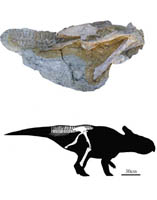
  • New Leptoceratopsid Found from the Upper Cretaceous of Shandong Province, China
    READ MORE >> Jan 04, 2016
  • New Enantiornithine Bird with an Aerodynamic Tail Found in China
    READ MORE >> Jan 03, 2016
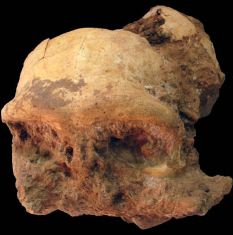
  • Well-Preserved Homo Erectus Skull Discovered in Eastern China
    Scientists have discovered a “well-preserved” Homo erectus skull, teeth and other skull bones at the Hualongdong archaeological site in Zhongzhi County of Anhui Province, eastern China, which was estimated to be between 150,000 and 412,000 years old, as announced in a news conference on November 20 in Anhui Province.
    READ MORE >> Nov 25, 2015
  • Earliest Modern Humans in Southern China Recast History of Early Human Migration
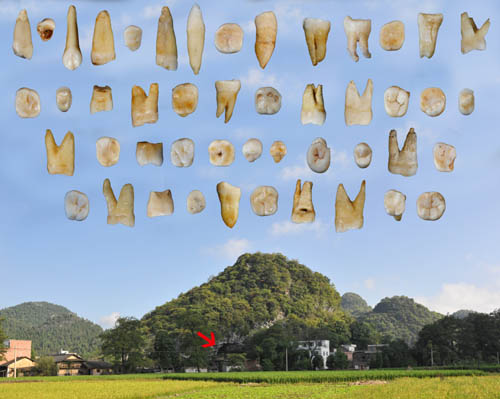
    In a paper published October 15 online in Nature, Dr. LIU Wu, Institute of Vertebrate Paleontology and Paleoanthropology (IVPP), Chinese Academy of Sciences, and his international team announced the discovery of human teeth between 80,000 and 120,000 years old from the newly excavated Fuyan Cave in Daoxian, southern China, and provided the earliest evidence of fully modern humans outside Africa. This discovery indicated that Homo sapiens trekked into Asia far earlier than previously known and much earlier than into Europe, providing important evidence for the study of dispersal routes of modern humans.

    READ MORE >> Oct 19, 2015
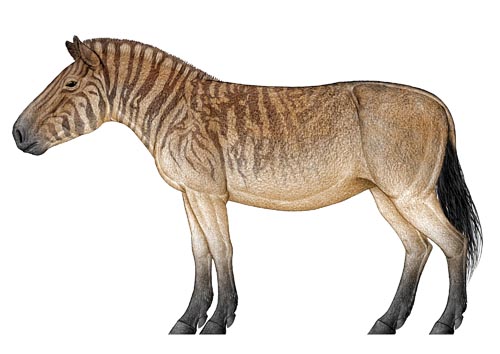
  • New discovery of Late Miocene Hipparion fossils from Baogeda Ula, Inner Mongolia, China
    READ MORE >> Oct 08, 2015
  • New Enantiornithine Bird Reveals the Refinement for Cranial Kinesis Occurring Early in Avian Evolution
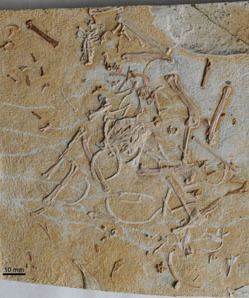
    Detailed cranial morphology remains largely unknown for enantiornithines. In a paper published online August 21 in Journal of Systematic Palaeontology, Dr. WANG Min, Institute of Vertebrate Paleontology and Paleoanthropology, Chinese Academy of Sciences, and his colleagues reported a new enantiornithine bird from the Early Cretaceous Jehol Biota. Although incomplete, the skeleton is disarticulated and several cranial elements are exquisitely well preserved in their entirety, providing morphological information that had previously been poorly understood.
    READ MORE >> Sep 17, 2015