Oldest Actinopterygian from China Provides New Evidence for the Origin of Ray-Finned Fishes
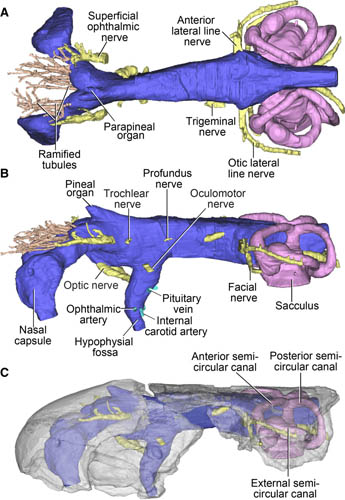
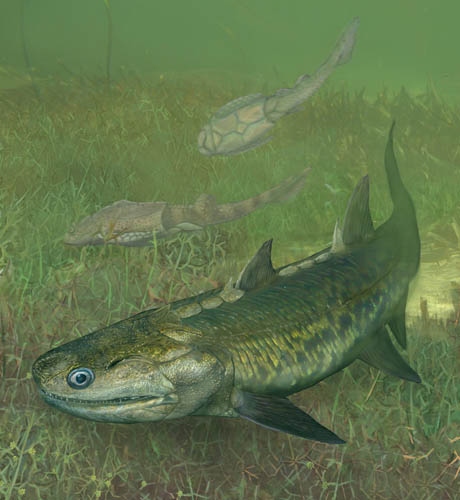
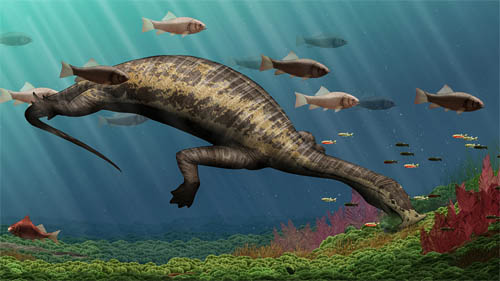
In a study published May 19 in Current Biology, Drs. LU Jing and ZHU Min, Institute of Vertebrate Paleontology and Paleoanthropology (IVPP), Chinese Academy of Sciences, and their collaborators used high-resolution computed tomography to re-examine the most complete remains of Meemannia, and presented new details of the internal skeleton and one of the earliest osteichthyan endocasts. Researchers revised hypotheses of bone histology in the ancestor of bony fishes, and found that “cosmine”-like tissues, previously thought to unite Meemannia with lobe-fins, are widely distributed among early bony fishes, including the ray-fin Cheirolepis. This finding revealed that once considered a lobe-fin, Meemannia is the oldest ray-finned fish, providing new evidence for the origin of ray-finned fishes.