Home>RESEARCH>Research Progress

Institute of Vertebrate Paleontology and Paleoanthropology
Chinese Academy of Sciences
Chinese Academy of Sciences

Home>RESEARCH>Research Progress
Frogs, salamanders and caecilians, the three groups of living amphibians, together number more than 9,000 species. They are, on average, the smallest of all four-limbed vertebrates, and some are extremely small: Brachycephalus toads measure less than 7 millimetres from snout to vent. Their ancient relatives looked very different. Most temnospondyls, the extinct lineage from which modern amphibians (lissamphibians) arose, were aquatic or semi-aquatic predators one to five metres long.
A new study, recently published on National Science Review, shows that a dramatic body size reduction at the origin of living amphibians is coupled with the emergence of new traits associated with ecological adaptations, allowing them to explore novel places within adaptive landscape that were largely inaccessible to their larger ancestors.
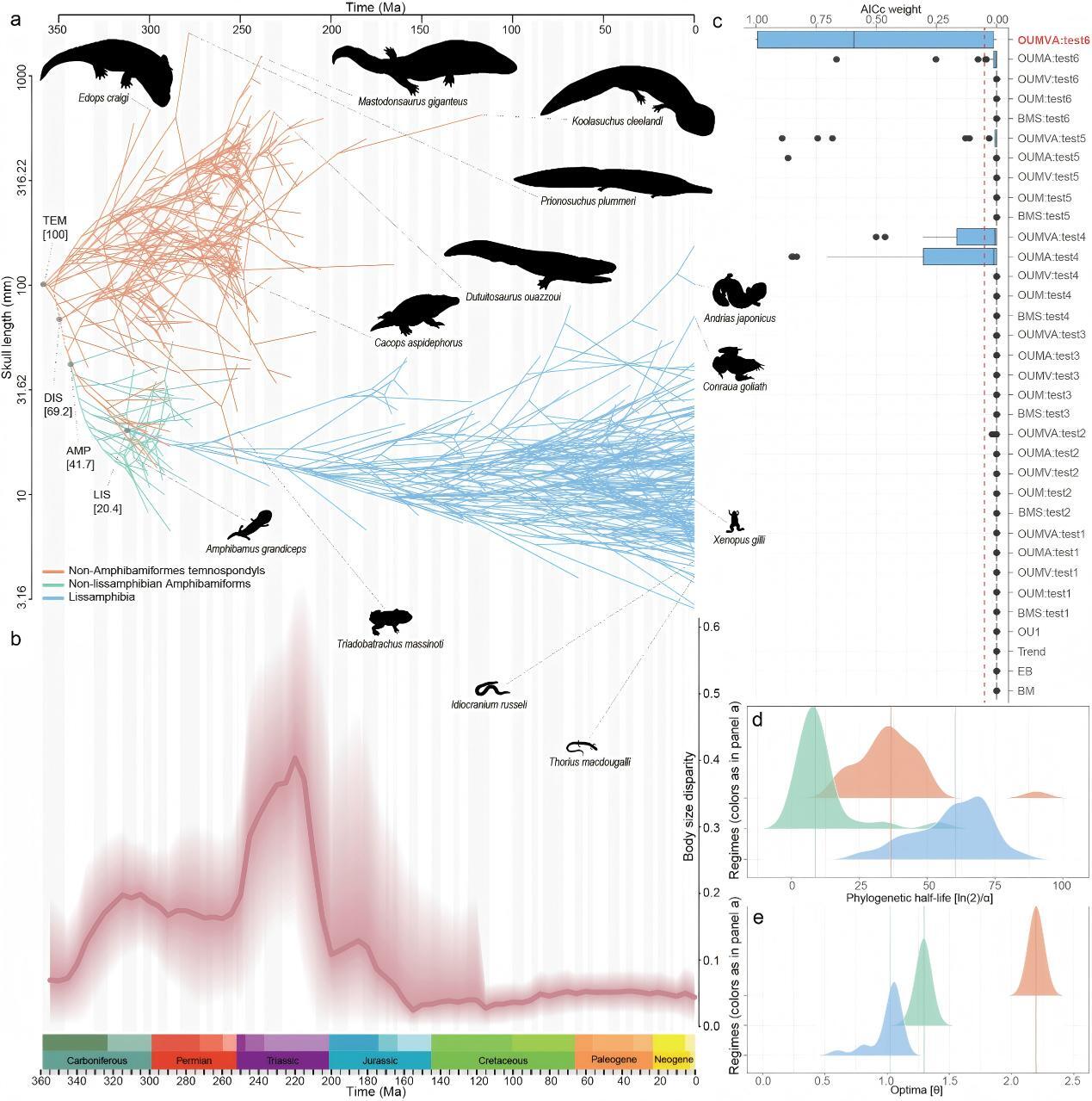
Figure1. Pattern of body size evolution across the temnospondyls-lissamphibian transition.
Scientists have long suspected that miniaturization played a role in amphibian origins. Dissorophoids, the closest extinct relatives of lissamphibians, were already smaller than other temnospondyls and showed juvenile-like features such as short snouts and large orbits, a result of shifts in developmental timing known as heterochrony. But early dissorophoids still lacked the distinctive anatomy of modern amphibians, hinting that further miniaturization, and deeper morphological changes, came later.
To test this hypothesis, the researchers analysed body size alongside skull and skeletal traits in 577 living and fossil species spanning the entire lissamphibian total group (Temnospondyli), comparing competing models of how these traits evolved.

Figure2. Evolution of jaw articulation across the temnospondyls-lissamphibian transition.
The analyses reveal a history of booms and busts. Body size diversity stayed low for the first 10 million years or so of Temnospondyli evolution, beginning in the Early Carboniferous, then rose sharply for about 30 million years. It held steady from the early Late Carboniferous to the Late Permian, increased again in the Early and Middle Triassic, and then fell substantially from the Late Triassic into the early Late Jurassic. Since then, it remains constant and low to present.

Figure3. Evolution of relative snout length across the temnospondyls-lissamphibian transition.
Crucially, the models show that by the Late Carboniferous, lissamphibians had shifted into a distinct “adaptive zone” of their own, with a much smaller optimal body size and relaxed evolutionary constraints than other temnospondyls. The result was a broad but downward-shifted range of body sizes that matches amphibian diversity today. The invasion of different size-related adaptive zones across different regimes of Temnospondyli, the study finds, was a major driver of how body size diversity changed over time.
The shift to small size coincided with the emergence of new morphology in body shape and skull geometry. In frogs and salamanders (Batrachia), skulls became shorter and broader, several bones at the back of the skull were lost, and the jaw joint moved forward. These changes likely sped up jaw movements and widened the gape, helping animals swallow prey quickly. Combined with suction feeding and projectile tongues, they made batrachians efficient hunters of small prey.
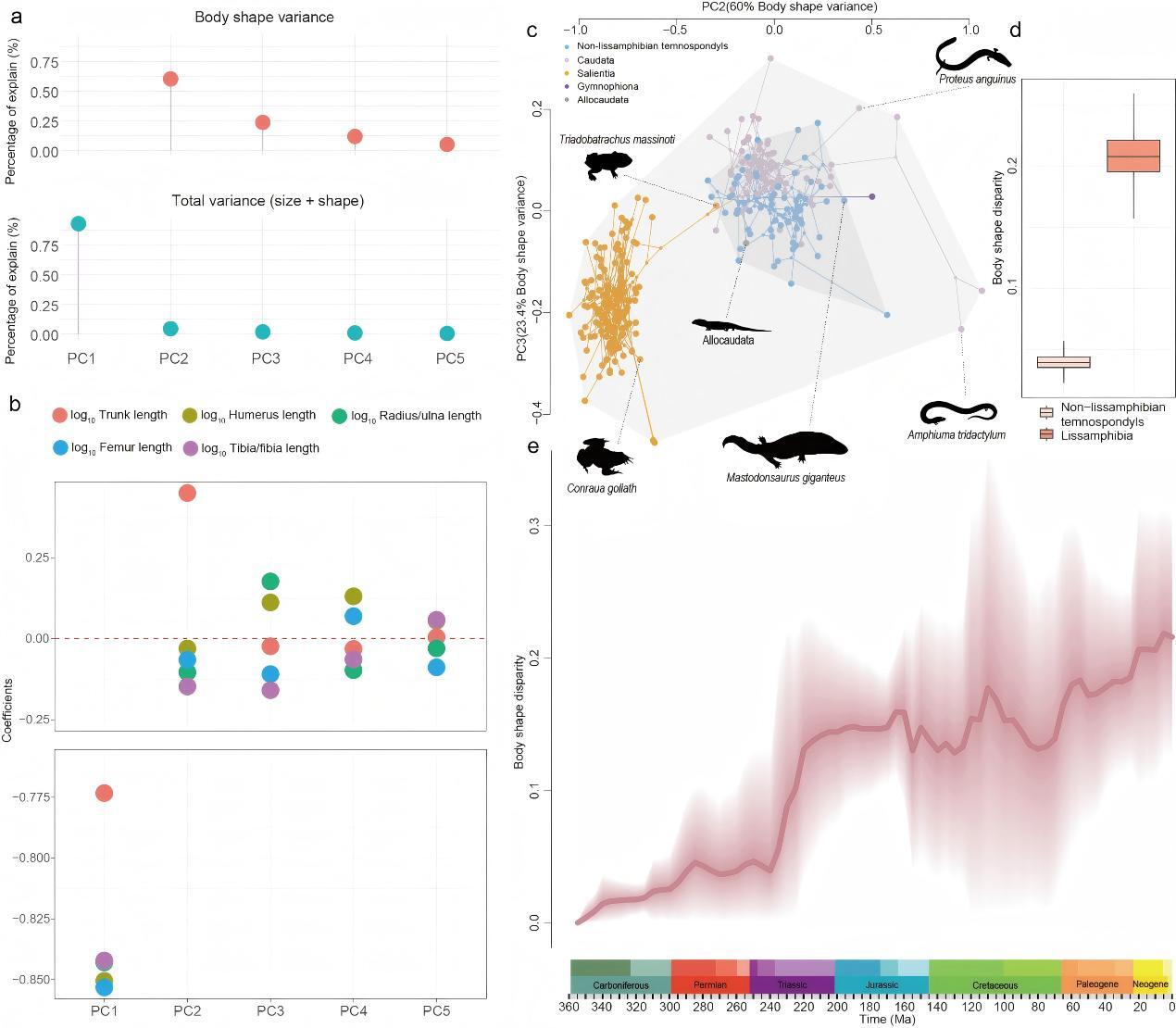
Figure4. Comparison of body shape morphospace across the temnospondyls-lissamphibian transition (with limbless taxa dropped).
Caecilians took a different route. These mostly burrowing animals push through soil head first, and the analyses detected strong evolutionary pressure toward longer snouts. Their forward-placed jaw joint boosts the leverage of a key jaw muscle, delivering a powerful bite across a wide range of gape angles that lets them break up larger prey.
The researchers suggest that another factor helped: the dramatic metamorphosis inherited from the common ancestor of living amphibians. Because this transformation packs the development of land-adapted features into a short phase, evolution can readily adjust its timing. Some species remain aquatic by keeping larval features into adulthood, while others skip the free-living larval stage through direct development, emerging with features suited to life on land.
The findings may reflect a broader rule in vertebrate history. Similar bouts of rapid shrinking accompanied the rise of mammals from their therapsid ancestors and of birds from non-avian dinosaurs. The authors argue that miniaturization is closely tied to ecological innovation, and that a handful of such events helped give rise to the most species-rich vertebrate groups alive today.