
Institute of Vertebrate Paleontology and Paleoanthropology
Chinese Academy of Sciences
Chinese Academy of Sciences

The evolutionary transition from ground-dwelling, long-tailed dinosaurs to light, flight-adapted modern birds is one of the most profound morphological transformations in vertebrate history. While the acquisition of feathered wings is well-documented, the evolution of the characteristic short bird tail—terminating in a fused bony structure called the pygostyle—has long remained shrouded in mystery due to an exceptionally sparse fossil record.
In a pioneering study published in the journal Science Advances, a research team led by Dr. Min Wang from the Institute of Vertebrate Paleontology and Paleoanthropology (IVPP) of the Chinese Academy of Sciences, in collaboration with the Fujian Province Geological Science Research Institute, has discovered a new Late Jurassic bird fossil from the Zhenghe Fauna that perfectly bridges this evolutionary chasm.
The new species has been named Zhengheornis buyu. The genus name refers to Zhenghe County, southeastern China, where the holotype was found. The species name, "buyu," meaning unexpected, is from the ancient Chinese book Guoyu—alluding to the specimen’s surprising anatomical configuration in the tail and the pelvis.
Developmental studies have previously suggested that the fused avian pygostyle could arise rapidly from the pleiotropic effects of just a few genetic mutations. “Because long-tailed and short-tailed birds appeared nearly simultaneously in the early fossil record without clear intermediates, evolutionary biologists have long argued that a transitional species having an abbreviated but entirely unfused bony tail was biologically improbable and unlikely to have ever existed,” said Dr. ZHOU Zhonghe from IVPP, co-author of the study.
Dating back to the Tithonian stage of the Late Jurassic (approximately 148–150 million years ago), the beautifully preserved articulated skeleton reveals a uniquely abbreviated tail consisting of just 15 short caudal vertebrae with no fused pygostyle. For comparison, the iconic Archaeopteryx possesses 23–24 caudal vertebrae, Jeholornis has 22–27, and other early bird-like dinosaurs exceed 30. Therefore, Zhengheornis buyu has shattered that consensus, definitively filling this “hypothetic vacancy. “This anatomical mosaic proves a stepwise evolutionary path: the vertebral reduction and shortening preceded pygostyle fusion in early bird evolution,” said Dr. WANG, the lead and corresponding author of the study.
The researchers note that this abbreviated, flexible tail convey major aerodynamic advantages. By shedding weight and shifting the animal’s center of mass forward, it reduced drag. Concurrently, having fewer joints increased the tail’s overall stiffness for enhanced flight control, while shorter levers allowed the animal to easily manipulate its tail feathers, granting Zhengheornis superior aerial stability and maneuverability compared to Archaeopteryx.
Beyond its tail, Zhengheornis buyu was incredibly tiny. Using empirical scaling equations, the team estimated that Zhengheornis weighed a mere 74 to 163 grams in life, documenting the smallest known long-tailed paravians (a group includes birds, troodontids, and dromaeosaurids).
Zhengheornis represents the fourth avialan discovered from the newly recognized Zhenghe Fauna. It co-existed alongside the bizarre, long-legged Fujianvenator and the early short-tailed Baminornis. Phylogenetic morphometric analyses revealed that Zhengheornis lacked specialized features for strictly ground-dwelling or tree-dwelling lifestyles, indicating that this Jurassic bird was likely an ecological generalist.
The disparate body size, skeletal architecture, and niche preferences among these co-occurring Zhenghe birds (varying from the generalist Zhengheornis to the cursorial Fujianvenator) provide indisputable evidence that avialans had already underwent a major adaptive radiation by the very end of the Jurassic period. This landmark discovery effectively reconciles long-standing academic debates regarding the timing of the initial diversification of early birds
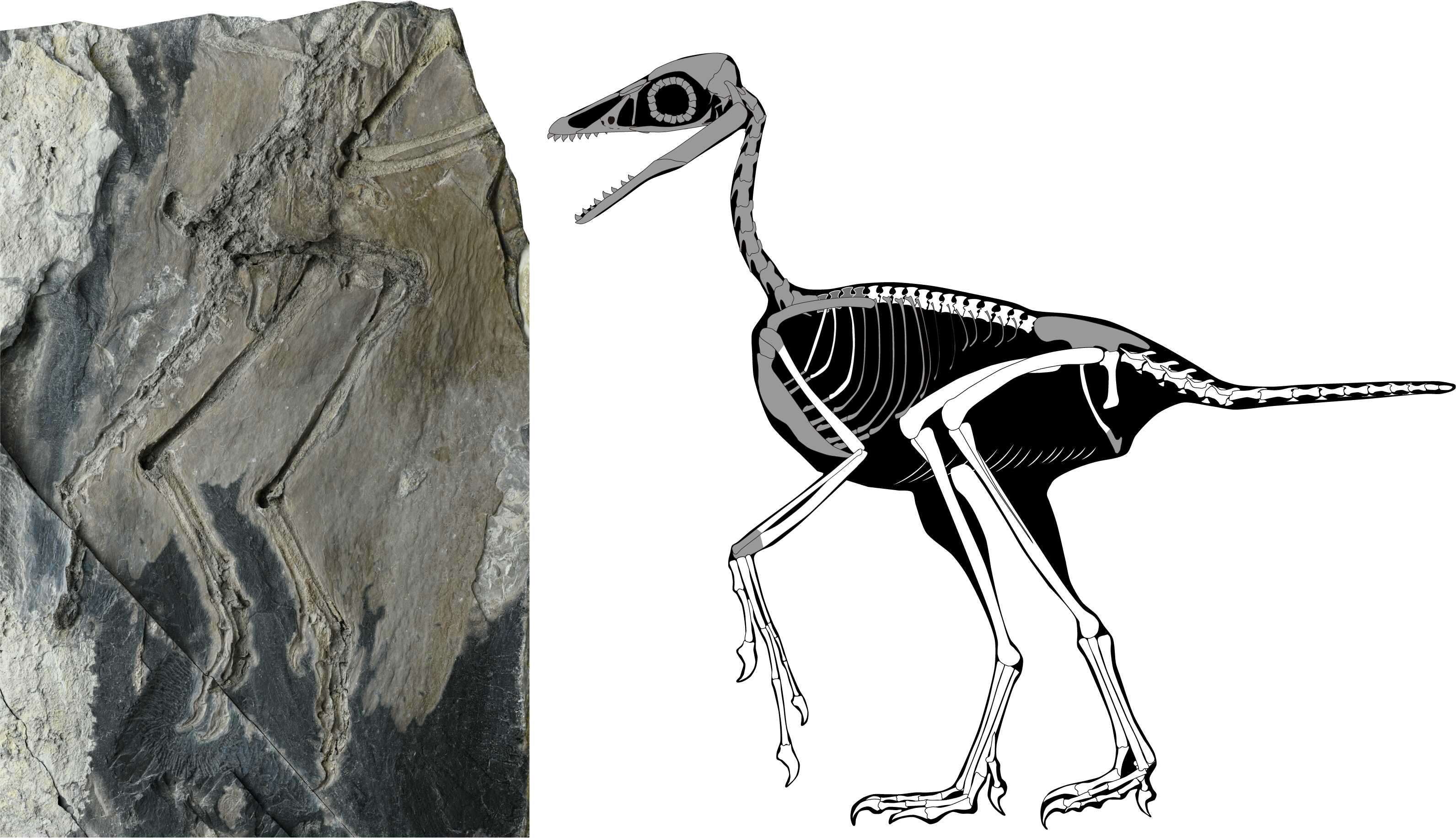
Figure 1. Photograph and skeletal reconstruction of the 150-million-yaer-old bird Zhengheornis buyu. Credit: Min Wang, Institute of Vertebrate Paleontology and Paleoanthropology, Chinese Academy of Sciences.
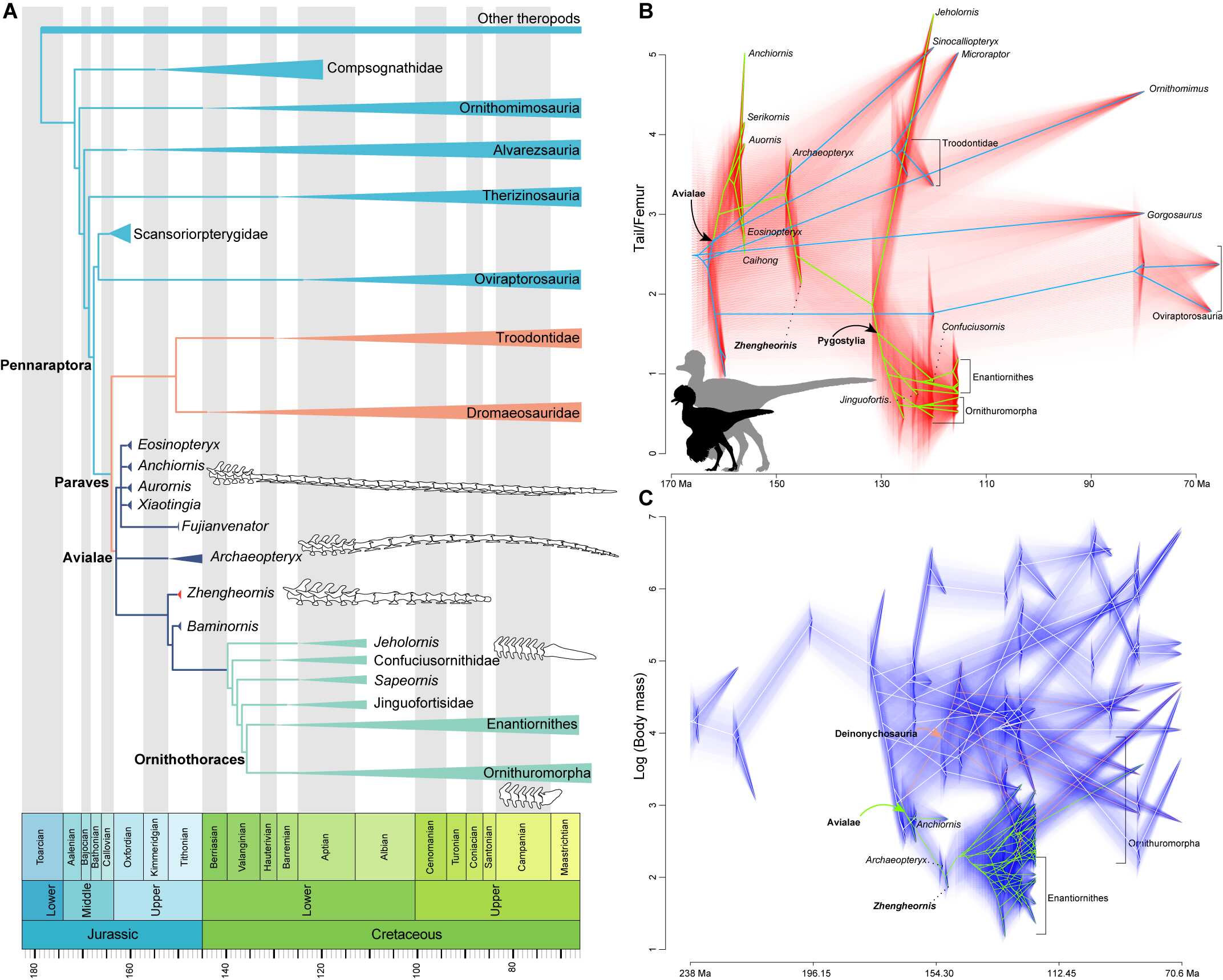
Figure 2. The evolutionary tree showing the position of Zhengheornis buyu, and tail length and body mass evolution across theropod dinosaur-bird transition. Credit: Min Wang, Institute of Vertebrate Paleontology and Paleoanthropology, Chinese Academy of Sciences.
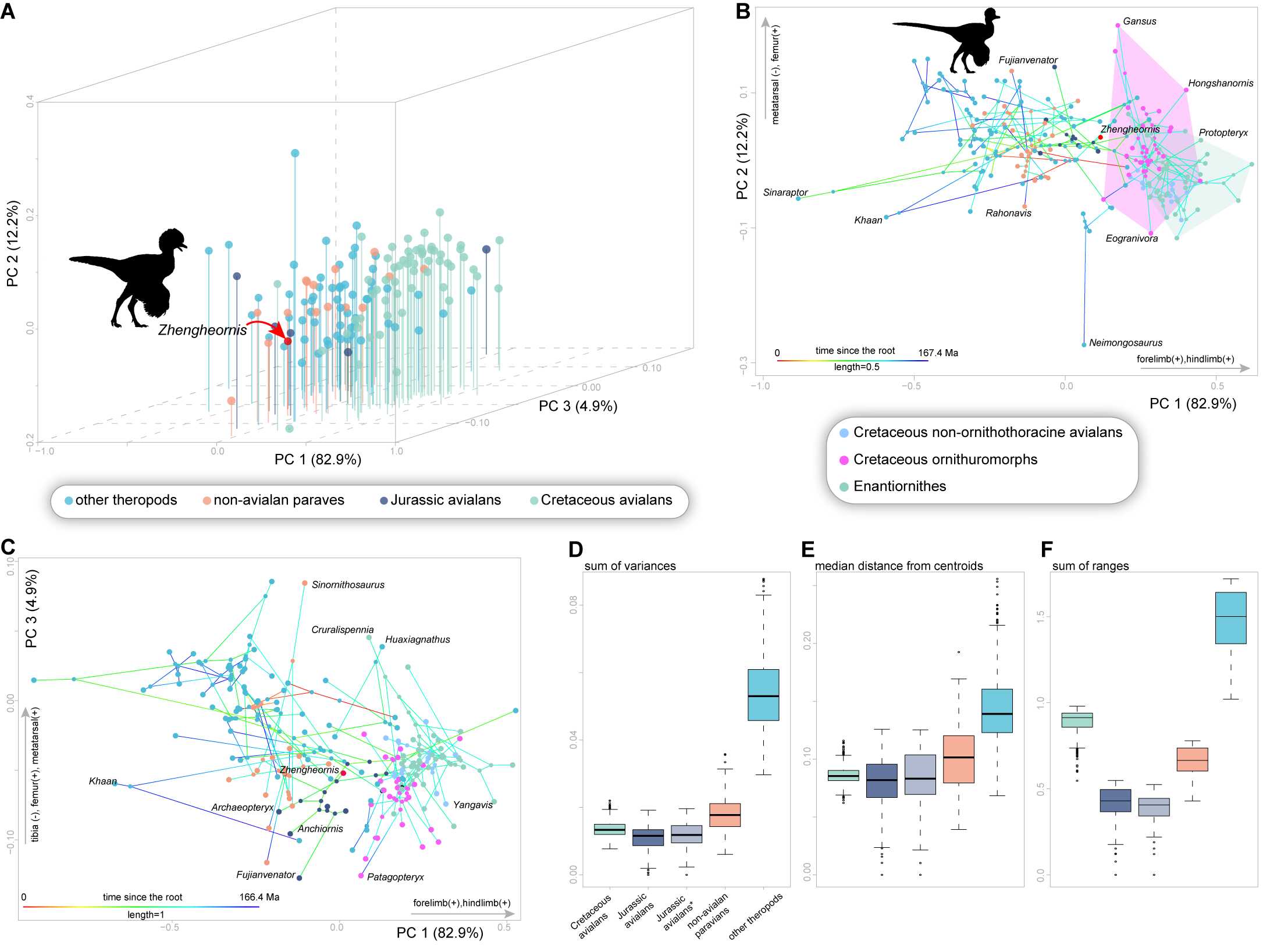
Figure 3. Morphospace and hindlimb disparity of Mesozoic birds and their theropod relatives. Credit: Min Wang, Institute of Vertebrate Paleontology and Paleoanthropology, Chinese Academy of Sciences.
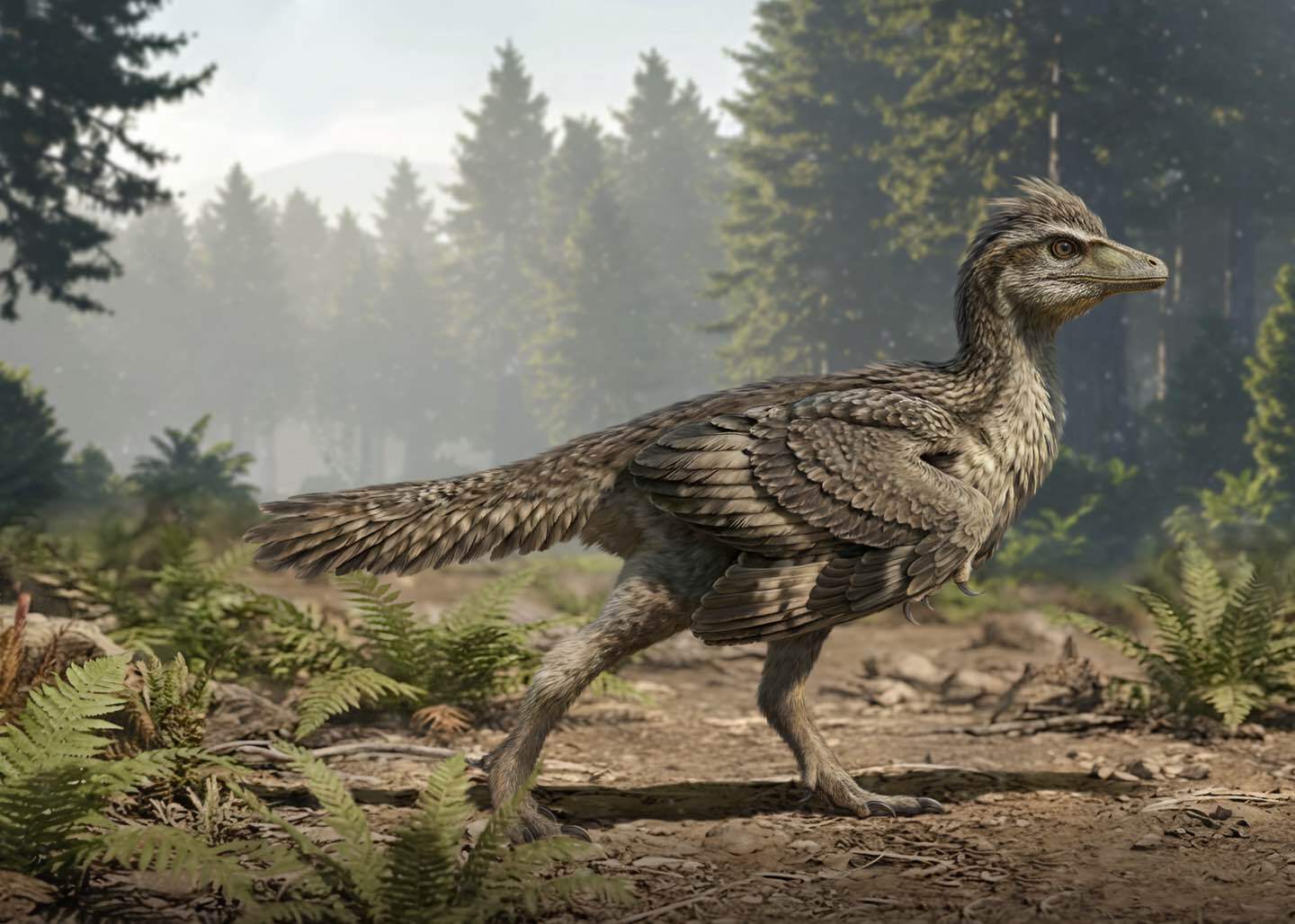
Figure 4. Life reconstruction of the Jurassic bird Zhengheornis buyu from the Zhenghe Fauna. Artwork by Mr. Chung-Tat Cheung.