Institute of Vertebrate Paleontology and Paleoanthropology
Chinese Academy of Sciences
Institute of Vertebrate Paleontology and Paleoanthropology
Chinese Academy of Sciences
Research Progress
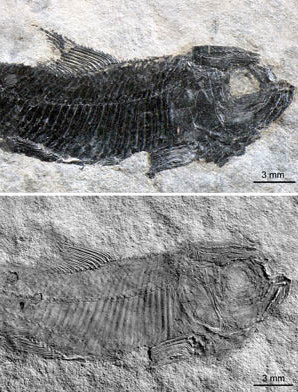
  • New Streamlined Galeaspid (Jawless Fish) Found From the Lower Devonian of Yunnan, China
    Dr. ZHU Min, Institute of Vertebrate Paleontology and Paleoanthropology (IVPP), Chinese Academy of Sciences, and his team described a new galeaspid, Rhegmaspis xiphoidea, from the Lower Devonian Posongchong Formation of Zhaotong, Yunnan Province, China. The new form has a torpedo-shaped head-shield, a long rostral process and ventrolaterally set eyes, which highlight an adaptation to an active suprabenthic lifestyle as reported in the journal of Vertebrata PalAsiatica.
    READ MORE >> Sep 08, 2015
  • Big Cats' Predatory Strategy Reflected by a Bovid Fossil of 2 Million Years Ago From Gansu, China
    READ MORE >> Jul 25, 2015
  • Scientists Discover an Early Modern Human with a Recent Neanderthal Ancestor
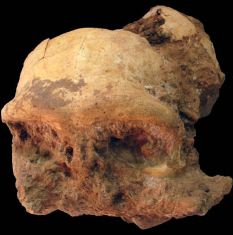
    Dr. FU Qiaomei, Institute of Vertebrate Paleontology and Paleoanthropology of Chinese Academy of Sciences (IVPP), and scientists from Germany, USA, Romania and Canada, discovered that a 37,000–42,000-year-old modern human from Pe?tera cu Oase, Romania had the order of 6–9% of the genome derived from Neanderthals, more than any other modern human sequenced to date. The finding published online June 22 in Nature suggests that the mixture between modern humans and Neanderthals was not limited to the first ancestors of present-day people to leave Africa, or to people in the Near East, and it occurred later as well and probably in Europe.
    READ MORE >> Jun 22, 2015
  • Latest-known Diadectomorph Discovered from the Upper Permian of China
    READ MORE >> May 08, 2015
  • Bizarre Jurassic Dinosaur with Membranous Wings Discovered in China
    READ MORE >> May 07, 2015
  • Large Theropod Teeth Found From the Upper Cretaceous of Jiangxi, Southern China
    In a paper published in the latest issue of Vertebrata PalAsiatica, Dr. XU Xing, Institute of Vertebrate Paleontology and Paleoanthropology (IVPP), Chinese Academy of Sciences, and MO Jinyou, Natural History Museum of Guangxi in Nanning reported two isolated, large predatory theropod teeth from the Upper Cretaceous of southern China; the smaller tooth is assigned to a tyrannosaurid, whereas the larger one is greatly distinct from other known Late Cretaceous theropods, probably represents a previously unrecognized large predatory dinosaur. These large predatory theropod teeth were discovered for the first time from the Upper Cretaceous Nanxiong Formation of Jiangxi, helping better understand the known diversity of vertebrates from the Upper Cretaceous Nanxiong Formation, southern China.
    READ MORE >> Mar 19, 2015