|

| Location: Home > About Us > Brief Introduction |
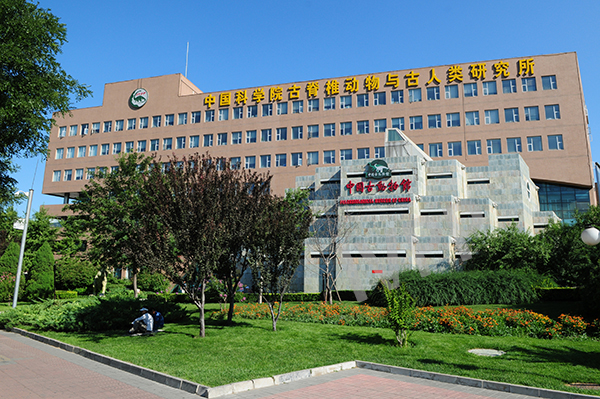
| Institute of Vertebrate Paleontology and Paleoanthropology, Chinese Academy of Sciences |
|


The Institute of Vertebrate Paleontology and Paleoanthropology (IVPP), Chinese Academy of Sciences (CAS), is one of world’s premiere paleontological institutions. IVPP researchers study the institute’s namesake disciplines, vertebrate paleontology and paleoanthropology, and their related areas of geological and biological sciences as well as Paleolithic archaeology. Vertebrate paleontological research focuses on the morphology, taxonomy, phylogeny, paleoecology, and spatial and temporal distribution of the various vertebrate groups, as well as other relevant biogeographical, paleoclimatological, developmental and molecular biological problems. The paleoanthrological study mainly deals with origin and evolutionary history of fossil human and Paleolithic archeology. Moreover, the study of applied anthropology and physical anthropology has also been emphasized in recent years. Many magnificent research results have been achieved and 130 research papers have been published in Nature and Science from 1993-2021. The institute employs 159 staff members, including four members of Chinese Academy of Sciences (CAS) and about 86 researchers holding high-ranking professional posts. In addition, a skilled technical team supports the research enterprise, preparing, casting and molding, and drawing and photographing fossils. IVPP is equipped with state-of-the-art lab equipment, including 3D micro-CT, an electron microscope, precision cutting machines, grinding machines, polarized light microscopes, and laser-scanning confocal microscopes, etc. It also enjoys financial support from various grant agencies due to its excellent research output. The institute edits and publishes four periodicals, Vertebrata PalAsiatica, Acta Anthropologica Sinica, Fossils and Dinosaur. The institute has Asia’s greatest collection of vertebrate and human fossils with more than 210,000 catalogued specimens. It also boasts the Paleozoological Museum of China, which has three stories of spacious exhibition halls and attracts tens of thousands of visitors annually. Three scholarly organizations are affiliated with IVPP: the Society of Vertebrate Paleontology, a branch of the Palaeontological Society of China, and the Quaternary Research Association of China's Paleoanthropology-Paleolithic Sub-Committee and Stratigraphy Sub-Committee. International collaboration and exchange have developed rapidly during recent years. The institute has established collaboration with more than 20 countries worldwide, mainly on the studies of early vertebrates, fossil reptiles, dinosaurs and birds, terrestrial mammals, and the origin of early hominids and their environmental background. About ten postdoctoral researchers from the USA, Canada, Japan, England and France have worked at the institute for one to two years, and a Fulbright Scholar from the USA has spent one year at the institute. IVPP strives to provide funding for international doctoral students and postdoctorial scholars, and seek to collaborate with overseas institutions to train international graduate students. IVPP has organized overseas exhibits of its fossil collections and will continue to do so in order to showcase the wonderful fossils found in China. IVPP’s current prominent position in the international paleontological community owes a great deal to its luminous pioneers such as the late C. C. Young. The institute's origin can be traced back to the Cenozoic Research Laboratory, which was established in 1929 as a subordinate branch of the Geological Survey of China. During the early days of the People’s Republic of China, the Cenozoic Research Laboratory was affiliated to the National Planning and Steering Commission for Geological Works, and in 1953 it became an independent Research Laboratory of Vertebrate Paleontology of CAS. Its name was changed to the Institute of Vertebrate Paleontology in 1957, and it attained its present name in 1960. IVPP staff members have done fieldwork in all corners of China and made numerous newsworthy findings, including a number of scientifically significant and far-reaching discoveries which were honored as the Top 100 Science Stories by Discover magazine (in 1995, 2004, 2010 and 2013), the Top 10 Scientific Discoveries in the world by the New York Times magazine (in 2007), the Top 10 Science and Space Stories by CNN News (in 2013), China's Top Ten Science Achievements (in 2003, 2007, 2009 and 2010) and Top 10 News Stories in Basic Research in China (in 1999, 2000, 2001, 2005 and 2009). A number of young paleontologists, paleoanthropologists, and archaeologists from IVPP have become well established in many other universities and museums. Many of them have already become internationally known experts in their particular fields. |